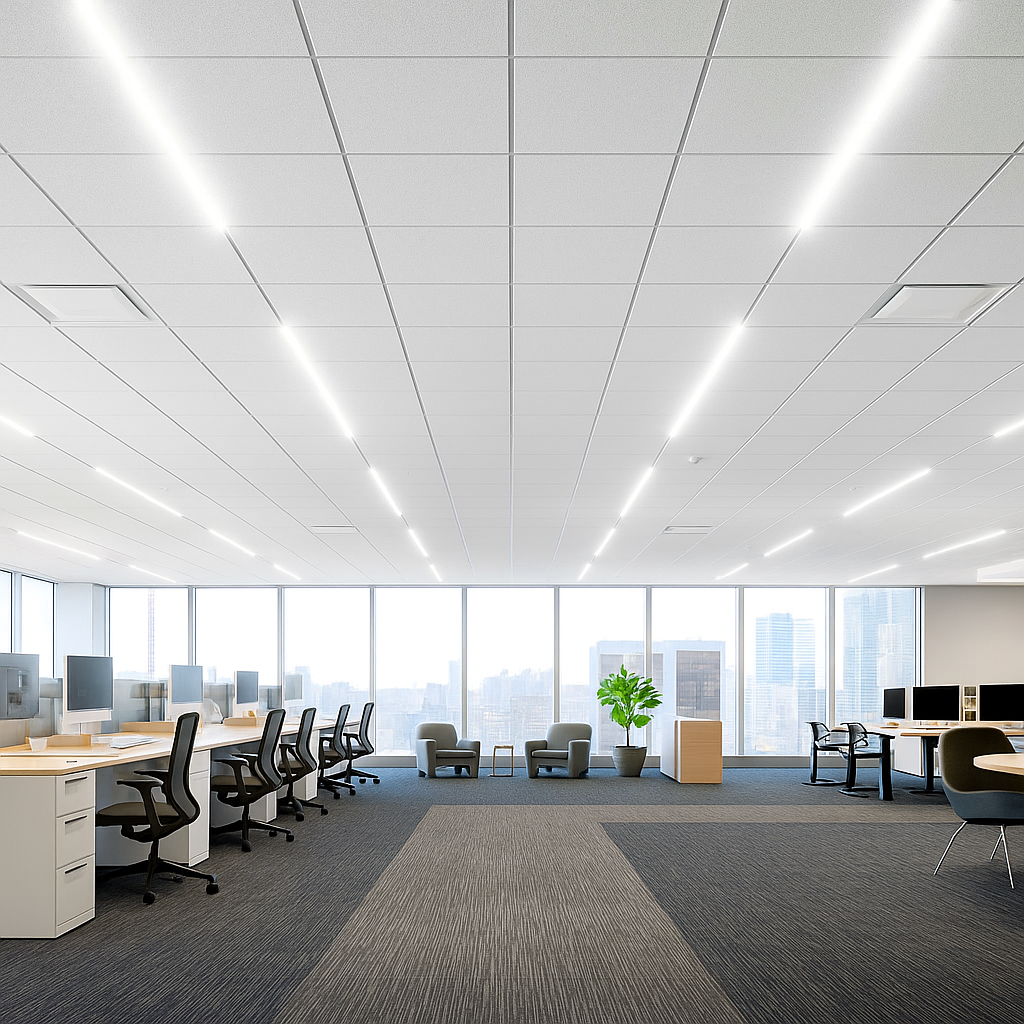
A drop ceiling grid system—also known as a suspended ceiling grid or T-bar system—is the underlying framework that supports ceiling tiles in a drop ceiling assembly. It is typically a lightweight, modular, and suspended structure installed below the building’s structural ceiling. The system firmly holds the ceiling panels in place while concealing ductwork, wiring, and other utilities above.
Core Components of the Grid System
-
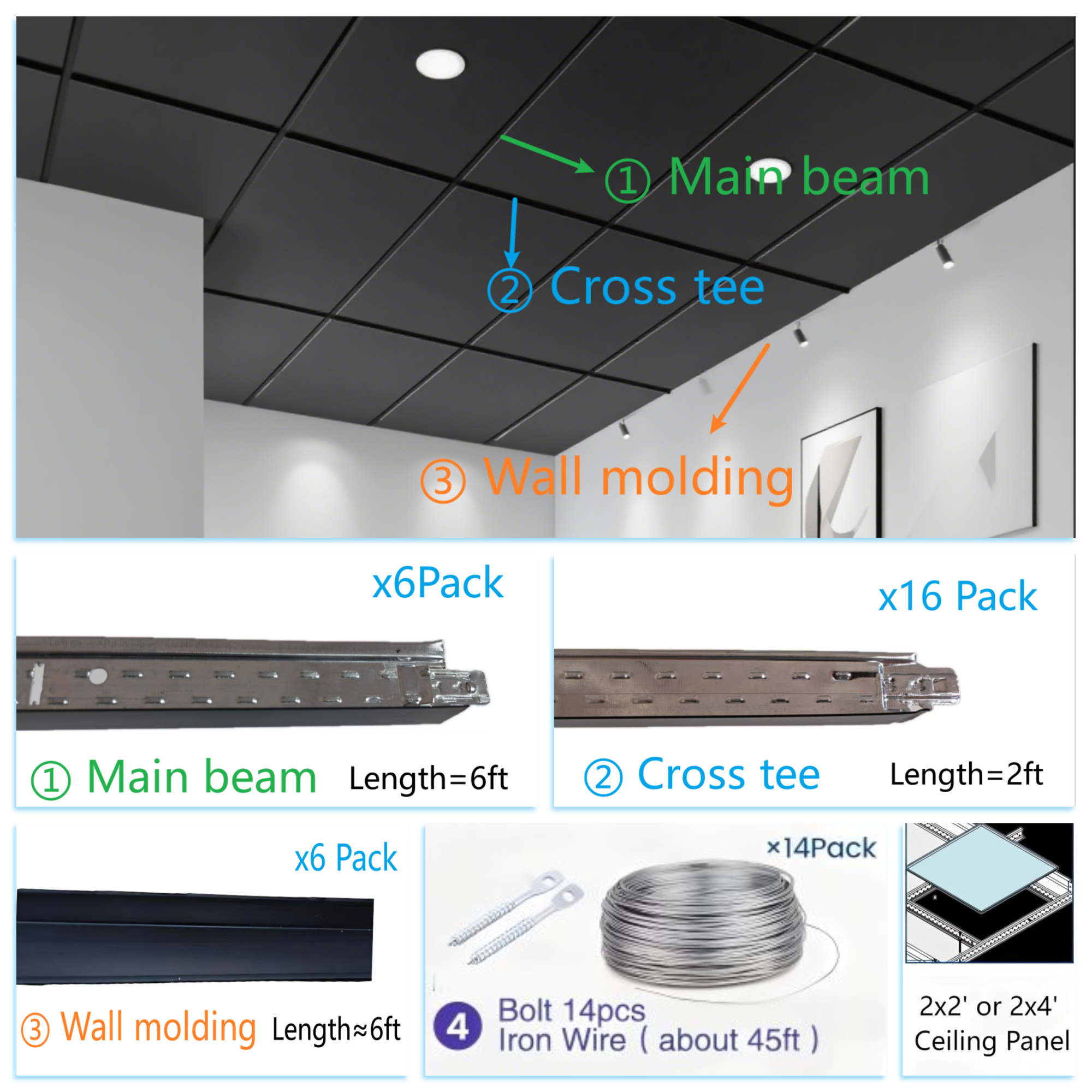
Main Beams
-
These are the primary structural elements running the length of the ceiling.
-
They carry the weight of the entire ceiling system, including tiles and fixtures.
-
-
Cross Tees
-
Shorter bars that intersect with Main Beams, forming the grid cells.
-
They define the layout and support the individual ceiling tiles.
-
-
Wall Moldings
-
L-shaped wall moldings are installed around the perimeter of the room.
-
They hold the edges of Main and Cross Tees, ensuring stability and a clean finish.
-
-
Hanger Wires
-
Steel wires are used to suspend the grid from the ceiling joists or structure above.
-
They support the grid at a uniform height across the entire ceiling.
-
-
Ceiling Tiles or Panels
-
Lightweight infill materials—commonly mineral fiber, PVC, metal, or gypsum—placed into the grid.
-
Offer aesthetic coverage and functional benefits such as acoustics or fire resistance.
How It Works
Once installed, the grid system forms a tidy checkerboard of rectangular or square cells—typically 2'×2' or 2'×4' in size. This structure not only creates a visually appealing ceiling but also leaves a plenum space above, ideal for hiding systems like HVAC, lighting, and wiring while keeping them accessible for maintenance.
Benefits of the Grid System
-
Easy Maintenance: Tiles can be lifted or replaced individually, simplifying access without demolition.
-
Design Flexibility: Both grid and tile finishes come in a wide range of styles, colors, and materials to suit any aesthetic.
-
Functional Enhancements: Acoustic, moisture-resistant, or fire-rated panels improve comfort and safety.
-
Cost-Effective Installation: Modular design means quicker setup and lower labor compared to traditional ceilings.